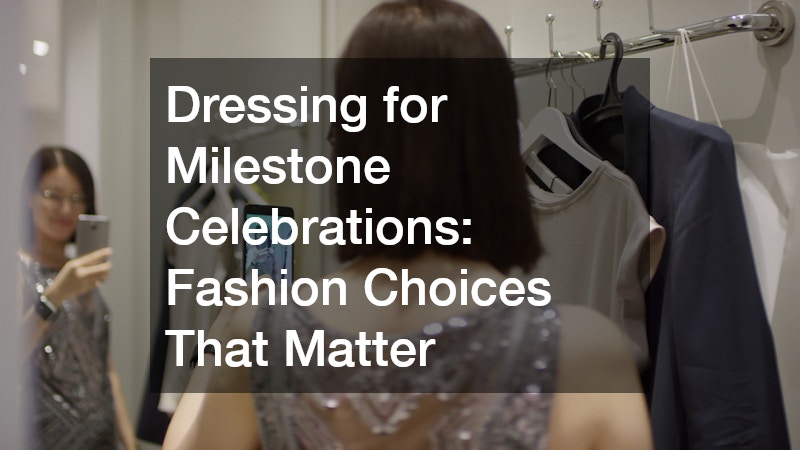
Milestone celebrations only come around so often, and what you wear can shape how confident and comfortable you feel throughout the day. Whether you are marking a milestone birthday, an anniversary, a graduation, or a promotion party, the right outfit choice does more than complete a look, it helps you feel present and photograph-ready. Many people struggle with balancing formality, comfort, and personal style all at once, especially when the celebration involves hours of standing, mingling, and picture-taking. This guide walks through practical fashion decisions that make a real difference so you can plan your outfit with confidence instead of last-minute stress.
Understanding the Occasion Before You Shop
Before browsing racks or scrolling online stores, take a moment to clarify what kind of celebration you are dressing for. A formal milestone anniversary calls for a very different wardrobe than a casual backyard graduation party, and mixing up the two can leave you feeling underdressed or overdressed. Consider the venue, time of day, and guest list size as clues: a rooftop cocktail reception for 30 guests signals cocktail attire, while a large hall wedding reception often calls for formalwear like a floor-length gown or a suit and tie.
Ask the host directly if you are unsure, since most people appreciate the question and would rather clarify than have a guest feel out of place. A simple text asking “Is this cocktail attire or more casual?” takes seconds but saves you from an awkward entrance. If the invitation lists a dress code, take it at face value rather than assuming it’s a suggestion.
Knowing the tone of the event early gives you time to plan, shop, and make alterations if needed. Tailoring alone can take one to two weeks, and formalwear rentals often require reservations three to four weeks in advance during peak seasons like spring weddings and holiday parties. Building in that buffer also leaves room to source accessories, shoes, or a backup option if your first choice doesn’t work out.
The time of day also plays a bigger role than most people realize when choosing an outfit. Daytime celebrations, typically anything before 5 or 6 p.m., call for lighter fabrics like cotton, linen, or chiffon paired with softer colors such as blush, pale blue, or soft yellow. Evening events, by contrast, allow for richer tones like emerald, burgundy, or navy, along with more dramatic silhouettes, think structured blazers, floor-length gowns, or fabrics with a bit of shine like satin or velvet.
Venue matters just as much as the clock. An outdoor garden brunch calls for breathable materials and flatter shoes, while a formal ballroom dinner practically demands heels and a more polished, tailored look. Even the season should factor in: a summer afternoon party leans toward short sleeves and open-toe shoes, while a winter evening celebration might call for tights, layers, or a tasteful wrap.
Thinking through these details early, time, venue, and season together, prevents the common mistake of showing up in something that feels mismatched to the mood of the room. A quick mental checklist before you shop can save you from returning three outfits the week before the event.
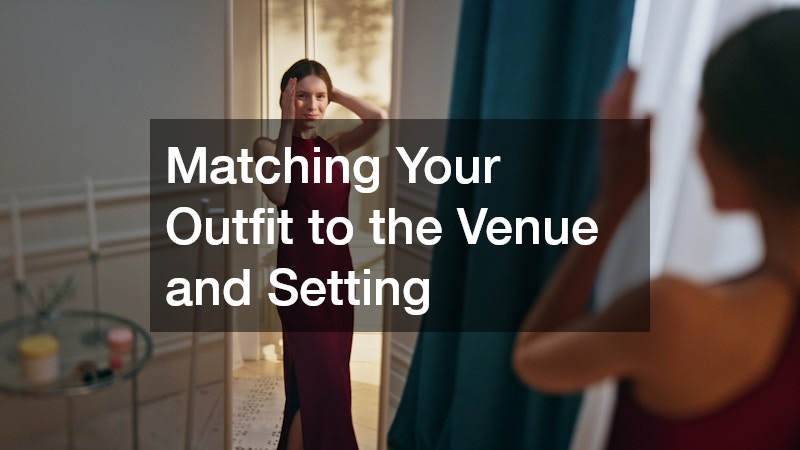
Matching Your Outfit to the Venue and Setting
The location of the celebration should heavily influence your clothing choices, since terrain, temperature, and formality vary widely from one place to another. An outdoor garden party calls for different footwear and fabric than a formal ballroom dinner, and failing to account for this can make you uncomfortable for hours. Grass and gravel can wreak havoc on stiletto heels, while a beachfront ceremony may call for breathable linen and sandals rather than heavy wool suiting.
Before finalizing your outfit, find out details about the event venue, including whether it is indoors or outdoors, climate controlled, and how much walking or standing will be involved. A rooftop reception in summer heat demands lighter fabrics and sun protection, while a historic estate with uneven cobblestone paths favors sturdier, low-heeled shoes.
It also helps to ask about the season and time of day, since evening events at the same venue often run cooler and may warrant a wrap, shawl, or light jacket. Knowing these details in advance lets you plan layers, adjust hemlines, and choose materials that keep you looking polished without sacrificing comfort.
Many event venues also have unspoken dress expectations tied to their style, such as historic estates leaning formal or industrial loft spaces leaning modern and relaxed. A restored mansion with marble staircases and crystal chandeliers practically calls for structured silhouettes, tailored suits, or floor-length gowns, while a converted warehouse with exposed brick and string lights welcomes jumpsuits, tailored separates, or sleek midi dresses.
Outdoor settings bring their own practical demands. Vineyards, gardens, and beachfront ceremonies often mean uneven grass, sand, or gravel underfoot, so block heels, wedges, or dressy flats tend to hold up better than thin stiletto heels, and lightweight fabrics like linen or crepe handle heat and humidity more gracefully than heavy velvet or wool.
If photos are a big part of the celebration, consider how your outfit will look against the backdrop of the space, whether that is greenery, string lights, or a grand staircase. Jewel tones and soft pastels tend to photograph beautifully against natural foliage, while metallics and deep neutrals can stand out nicely under the warm glow of string lights or candlelight. It’s also worth checking whether the event venue has a dominant color scheme in its décor, so your outfit complements rather than clashes with the space in every photo.
- Ask the host or planner about the venue type and dress code expectations, such as “black-tie,” “garden casual,” or “cocktail attire,” so you’re not guessing
- Check whether the space is climate controlled or exposed to outdoor weather — a rooftop reception in July calls for breathable fabrics, while a tented winter wedding may require layers
- Consider flooring type when selecting heels or formal shoes; stiletto heels can sink into grass or gravel, while smooth marble or hardwood may call for extra traction
- Factor in how much walking or standing you’ll do, since ceremonies on uneven terrain or long cocktail hours favor sturdier, more comfortable footwear
- Look up photos of the space in advance to visualize your outfit there, paying attention to lighting, color schemes, and overall formality of the decor
- Note the time of day and season, as evening events often allow for richer fabrics and darker tones while daytime affairs suit lighter colors and materials
Choosing Colors and Fabrics That Photograph Well
Milestone celebrations are almost always documented in photos, so it helps to choose colors and fabrics that hold up well on camera. Overly busy patterns or very small prints can look distracting in photos, while solid colors and subtle textures tend to photograph more cleanly. Jewel tones, soft neutrals, and deep classic shades generally flatter a wide range of skin tones and lighting conditions.
Fabric choice matters just as much as color, especially for events with flash photography or bright natural light. Fabrics with a slight sheen can catch light nicely, while very shiny or overly matte materials can sometimes look flat or washed out depending on lighting. Testing an outfit in different lighting at home before the event can help you avoid surprises later.
- Solid colors and gentle textures tend to photograph more consistently than busy prints
- Deep jewel tones often flatter multiple skin tones under indoor lighting
- Avoid all-white or all-black outfits if flash photography is expected, since details can get lost
- Try on your outfit near a window and under indoor lighting to compare how it looks
Accessorizing Without Overdoing It
Accessories can elevate a milestone outfit, but too many statement pieces at once can compete with each other and overwhelm the overall look. A good rule of thumb is to choose one focal accessory, such as a bold necklace or a standout clutch, and keep the rest simple. This approach keeps attention on you rather than on a cluttered mix of jewelry, bags, and shoes.
Comfort should also guide accessory choices, particularly for items you will wear for several hours. Heavy earrings or tight bracelets might look great in the mirror but can become distracting or uncomfortable by the middle of the event. Choosing accessories you have already tested for comfort helps you enjoy the celebration instead of adjusting your outfit all night.
- Pick one statement piece and let other accessories stay understated
- Test jewelry weight and fit before the day of the event
- Choose a bag size that fits essentials without becoming bulky
- Coordinate metals or tones across jewelry for a cohesive look
Dressing for Comfort During Long Celebrations
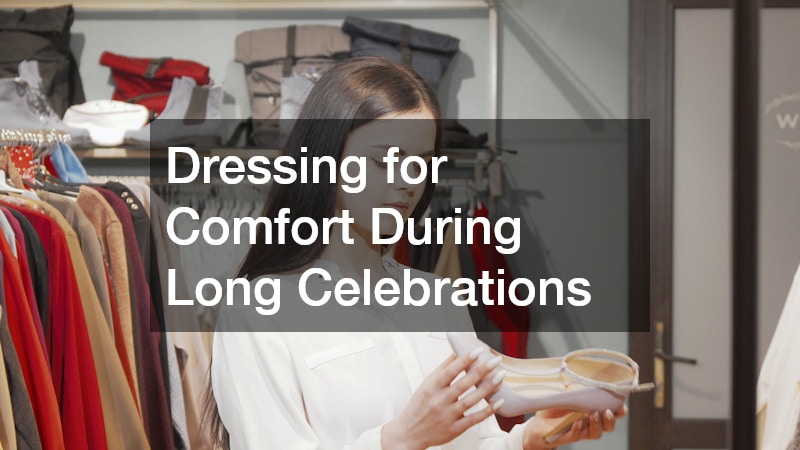
Milestone celebrations often stretch across several hours, including dinner, toasts, dancing, and photos, so comfort deserves serious consideration. Fabrics that breathe well and allow movement, such as cotton blends or stretch knits, tend to hold up better than stiff materials that restrict motion. Footwear is especially important, since standing or dancing for long periods in unfamiliar shoes can quickly turn a great outfit into a painful mistake.
Layering is another practical strategy, particularly for celebrations that move between indoor and outdoor spaces or span different times of day. A light jacket, shawl, or cardigan can be added or removed as temperatures shift, keeping you comfortable without sacrificing style. Packing a small emergency kit with things like blister pads or a stain remover pen can also save the day if something unexpected happens.
- Choose breathable fabrics that allow easy movement for dancing or mingling
- Break in new shoes before the event or bring a backup pair
- Pack a light layer for temperature changes between indoor and outdoor spaces
- Carry small essentials like blotting sheets or a stain remover pen
Budget-Friendly Ways to Look Polished
Looking well-dressed for a milestone celebration does not require an expensive new outfit every time. Renting formal wear, shopping secondhand for quality pieces, or rotating outfits you already own with new accessories can all create a fresh look without a big expense. Tailoring is often an underused trick, since even an inexpensive outfit can look expensive once it fits properly through the shoulders and waist.
Planning ahead also helps stretch a budget further, since last-minute shopping often leads to overspending on convenience rather than value. Building a small capsule of versatile pieces, such as a neutral dress or blazer that works for multiple events, means you are not starting from scratch every time a celebration comes up. This approach saves money over time while still allowing you to feel put together for every milestone occasion.
- Consider renting formal wear for one-time events instead of buying
- Invest in tailoring to make existing pieces look more polished
- Build a small capsule wardrobe of versatile pieces for multiple occasions
- Shop early to avoid last-minute price markups or limited selection
Dressing for a milestone celebration becomes far less stressful once you break it down into a few clear decisions about occasion, setting, comfort, and budget. Taking the time to think through fabric, color, and accessories ahead of the event helps you feel confident rather than rushed on the actual day. Start by researching the details of your specific celebration, then build your outfit around those practical realities rather than guessing. With a little planning, you can walk into any milestone event looking and feeling exactly the way you want to.